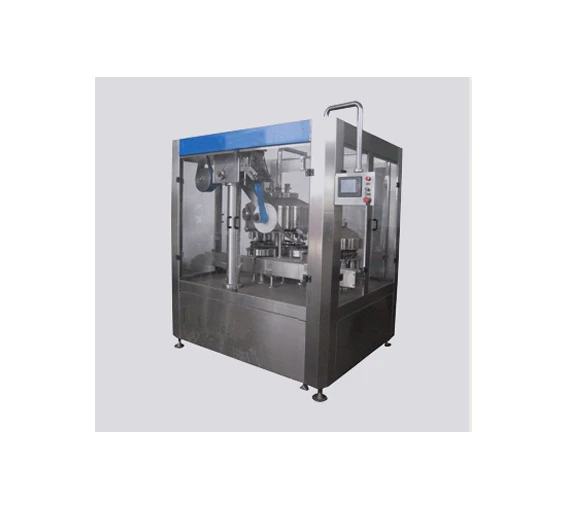
Olive Oil Bottling Equipment: Key Considerations

All Categories

olive oil bottling equipment

In the olive oil industry, efficient  and reliable bottling  equipment is crucial for maintaining product quality and  ensuring a smooth production process. Olive oil  bottling equipment encompasses various  machines and systems designed specifically for filling and packaging olive  oil into bottles,  ensuring that the oil remains uncontaminated  and  retains  its flavor and aroma. This article will delve into the  key considerations B2B buyers should  evaluate when sourcing olive  oil bottling equipment, including specifications,  quality  control  measures, cost factors, common  issues,  and  applications across industries.  For comprehensive solutions, buyers may also explore a variety of related equipment such as Packaging Material that complements the bottling process.


Evaluating Quality Control in Olive Oil Bottling Machinery

Quality control is a paramount consideration when selecting&nbsp; bottling machinery for olive oil. Contamination can occur at various stages of the bottling process, leading to compromised&nbsp; product quality. Therefore, machinery should incorporate features that minimize these risks,&nbsp; such as closed filling systems&nbsp; that reduce exposure to air&nbsp; and&nbsp; potential contaminants.</p>

Another critical aspect of quality control is the ability&nbsp; to conduct thorough inspections. Equipment that&nbsp; includes in-line inspection systems can&nbsp; check fill&nbsp; levels, seal integrity, and label accuracy, ensuring&nbsp; that every bottle meets the required standards before leaving the&nbsp; facility.&nbsp; Buyers should inquire&nbsp; about the manufacturer's quality assurance processes, including certifications like ISO9001, which&nbsp; indicates adherence to international&nbsp; quality management standards.</p>

Additionally, regular&nbsp; maintenance and checks are essential to ensure that the machinery continues&nbsp; to operate effectively. Buyers should look for suppliers that&nbsp; offer comprehensive installation and after-sales support to maintain equipment&nbsp; performance over time.</p>

Cost Factors to Consider When Sourcing Bottling Equipmen

The cost of olive oil bottling equipment can vary widely&nbsp; based on several factors, including the&nbsp; level of automation,&nbsp; the complexity of the machinery, and custom features. Buyers should establish a clear budget that considers&nbsp; not only the upfront purchase price but also ongoing operational costs, such as maintenance, energy consumption, and labor.</p>

When exploring options, it is crucial to compare&nbsp; the total&nbsp; cost of ownership rather than just the initial investment. For instance, while a lower-cost&nbsp; machine might&nbsp; seem attractive,&nbsp; it&nbsp; could&nbsp; incur higher maintenance costs or require more&nbsp; frequent replacements, thus increasing long-term&nbsp; expenses. </p>

Buyers should also consider the&nbsp; machine's production capacity and whether it&nbsp; aligns with their current and projected output levels. Investing in&nbsp; a machine that&nbsp; can&nbsp; scale with production&nbsp; demands can&nbsp; provide better value over time.</p>

Common Problems with Olive Oil Bottling Equipment and Solutions

Despite&nbsp; the advancements in bottling technology, buyers may&nbsp; encounter common issues with olive oil bottling equipment, such as inconsistent fill&nbsp; levels, leaks, or mechanical&nbsp; failures. To address inconsistent fill levels, it is essential to calibrate the filling system&nbsp; regularly, ensuring&nbsp; that it dispenses the&nbsp; correct volume of oil. Additionally, conducting routine&nbsp; maintenance checks can help prevent mechanical&nbsp; failures that lead to downtime.</p>

Leaks can&nbsp; often&nbsp; arise from worn-out seals or improper installation.&nbsp; Implementing regular&nbsp; inspections of the sealing&nbsp; mechanisms and ensuring they are properly installed can mitigate this&nbsp; issue. Buyers should&nbsp; also be informed about the warranty and support options provided by the manufacturer, as this can significantly&nbsp; affect resolution times for any equipment issues.</p>

Training staff on proper machine operation and maintenance practices can also help reduce the incidence of equipment-related&nbsp; problems. A knowledgeable workforce is key to maintaining production&nbsp; quality&nbsp; and efficiency.</p>

Applications of Olive Oil Bottling Equipment in Different Industries

While primarily associated with food and beverage sectors, olive oil&nbsp; bottling&nbsp; equipment has applications beyond just olive oil production. Industries such as cosmetics and pharmaceuticals increasingly utilize similar bottling machinery for essential oils&nbsp; and liquid products that require&nbsp; precise filling&nbsp; and labeling.</p>

In the food industry, for example, companies producing&nbsp; salad dressings or marinades may require bottling equipment that accommodates various bottle shapes and sizes. Understanding the specific&nbsp; needs of each industry can help buyers&nbsp; select the right equipment tailored to their application.</p>

Moreover, for businesses looking to&nbsp; export their products, ensuring compliance&nbsp; with international packaging and&nbsp; labeling standards is essential. Buyers should verify that their bottling&nbsp; equipment can accommodate these requirements, potentially reducing&nbsp; the need&nbsp; for additional machinery&nbsp; or rework.</p>&nbsp;

sourcing olive oil bottling equipment involves a thorough&nbsp; evaluation of specifications, quality control measures, cost implications, and industry applications. By understanding these factors, B2B&nbsp; buyers can make informed decisions that&nbsp; enhance production efficiency and product integrity, ultimately leading to better market positioning and&nbsp; customer satisfaction.</p>

Comparing Olive Oil Bottling Equipment Specifications and Features

When assessing olive oil&nbsp; bottling equipment, buyers should&nbsp; examine&nbsp; specifications such as filling speed,&nbsp; accuracy, bottle compatibility, and automation level. The filling speed is&nbsp; crucial as it&nbsp; affects overall production efficiency; a higher speed is&nbsp; often desirable but must&nbsp; align with&nbsp; accuracy to prevent spillage or under-filling. </p>&nbsp; <p>Buyers should also consider the types of filling systems&nbsp; available, such as gravity fillers, pressure fillers, or vacuum fillers, each suited to&nbsp; different viscosity levels of olive oil. For example, gravity fillers work well for lower viscosity liquids, while&nbsp; pressure fillers are better for thicker oils. Additionally, the material of&nbsp; the machine, often stainless steel for its resistance to&nbsp; corrosion and ease of cleaning, can significantly affect longevity and maintenance.</p> <p>Automation features, such as&nbsp; integrated labeling and&nbsp; capping machines, can streamline the bottling&nbsp; process and&nbsp; reduce labor costs. A fully automated line might be more expensive initially but can yield cost savings over time through&nbsp; increased efficiency. For instance, incorporating a Labeling Machine can enhance the overall packaging process.

Our Blog Posts

Beer Bottling Line Quality Control: Ensuring Consistent Carbonation Levels Every Batch

22

Sep

Beer Bottling Line Quality Control: Ensuring Consistent Carbonation Levels Every Batch

Quality control protocols for carbonation in beer bottling linesConsistency is key when it comes to carbonation in bottled beer, for the ultimate taste that home brewers look for! As beer-makers here at Mars, we recognize the significance of quality ...
View More
Filling Machine Sanitation: CIP (Clean-in-Place) Features for Fast, Effective Cleaning

12

Dec

Filling Machine Sanitation: CIP (Clean-in-Place) Features for Fast, Effective Cleaning

It is so critical to clean machines at factories. At Mars, we’re in a filling machine business, and keeping our machines clean is critical to everything running smoothly. One method of cleaning these machines is using CIP, an abbreviation for Clean-i...
View More
Shrink Packing Machine Film Thickness: Choosing the Right Gauge for Light vs. Heavy Bottles

15

Jan

Shrink Packing Machine Film Thickness: Choosing the Right Gauge for Light vs. Heavy Bottles

When packaging bottles the right thickness of shrink film is very important. The thickness of the film can make a significant difference, and different bottles want different kinds of care. Mars knows that for lightweight bottles, you want something ...
View More
Washing Capping Machine Cap Sorting: Auto-Sorting Systems to Avoid Misaligned Caps

17

Apr

Washing Capping Machine Cap Sorting: Auto-Sorting Systems to Avoid Misaligned Caps

Washing capping machines are important machine in a beverage and liquids bottling factory. Among various functions of washing capping machine, the cap sorting mechanism plays very important part. As is shown, the cap sorting mechanism of washing capp...
View More

Get a Free Quote

Our representative will contact you soon.
Email
Name
Company Name
Message
0/1000

Get a Free Quote

Our representative will contact you soon.
Email
Name
Company Name
Message
0/1000